
On this page
If you want to know how to check if your phone is unlocked with IMEI, you have a few reliable options. You can use an online IMEI checker, contact your carrier directly, or check your phone's settings.
Carrier lock status matters more than most people realize. If your phone is locked to one carrier, you cannot activate a SIM card or eSIM from another network.
This becomes a real problem the moment you try to use a local data plan while traveling abroad. This guide covers how to find your IMEI number, what an IMEI check can actually confirm, and what else to look at before buying a used phone or activating a travel eSIM.
Key Takeaways
- Your IMEI number can be found by dialing \*#06# on any phone, through your settings, or on the device box.
- An IMEI check can reveal carrier lock status, blacklist status, and basic device details. Your carrier's own check is the most reliable for unlock confirmation.
- Your phone must be carrier-unlocked before you can activate a travel eSIM or use a SIM from a different network.
What An IMEI Check Can And Cannot Tell You
An IMEI check gives you useful information about a device. It does not always give you the complete picture on its own.
Understanding exactly what the number represents and what each type of lock means helps you interpret results correctly.
What The IMEI Number Is And Why It Matters
The IMEI (International Mobile Equipment Identity) is a unique 15-digit number assigned to every mobile device. It works like a serial number for your phone, identifying the specific hardware rather than the user or SIM card.
The first eight digits form what is called the TAC (Type Allocation Code). This portion identifies the manufacturer and device model.
Carriers and databases use the full IMEI to track warranty status, report lost or stolen devices, and flag whether a phone is locked to a specific network. MEID is a similar identifier used on older CDMA devices.
If you have a newer phone, you will almost certainly be working with an IMEI rather than an MEID.
Carrier Lock Vs SIM Lock Vs Activation Lock
These three terms are often used interchangeably, but they describe different restrictions.
- Carrier lock (network provider lock): The phone is restricted to one carrier's network. It will reject SIM cards and eSIMs from other providers.
- SIM lock (SIM lock or simlock status): Functionally the same as a carrier lock in most cases. A SIM-locked phone requires a specific carrier's SIM to operate.
- Activation lock (iCloud Activation Lock): This is specific to Apple devices. It ties the iPhone to an Apple ID and prevents others from setting it up without the original owner's credentials.
Activation lock and carrier lock are completely separate issues. A phone can be carrier-unlocked but still iCloud-locked, which makes it unusable for a new owner.
Why An IMEI Check Is Useful But Not Always Definitive
An online IMEI lookup can return carrier lock status, blacklist status, and device details quickly. The catch is that third-party IMEI checker sites pull from databases that may not always be current or complete.
For the most accurate and authoritative answer on carrier lock status, a direct check through the carrier that originally sold the phone is more reliable.
How To Find Your IMEI Number
There are three straightforward ways to find your IMEI number. Most people can get it in under a minute.
Your phone also has an EID number if it supports eSIM, which is a separate identifier for the embedded SIM hardware.
Dial \*#06# On Any Phone
The fastest method works on virtually every phone, both iPhone and Android. Open your phone's dialer, type \*#06#, and do not press call.
The IMEI number appears on screen automatically. On dual-SIM devices, you will usually see two IMEI numbers displayed.
Both belong to the same device but correspond to separate SIM slots or eSIM profiles. Write the number down or take a screenshot before closing the screen.
Find The IMEI In iPhone And Android Settings
On an iPhone, go to Settings > General > About. Scroll down and you will find the IMEI listed alongside the serial number and EID (the eSIM identifier).
On Android, the location varies slightly by manufacturer. On Samsung devices, go to Settings > About Phone > Status Information.
On stock Android, go to Settings > About Phone. The IMEI appears near the device serial number.
Check The SIM Tray Box Or Apple ID Device List
If you cannot power the phone on, check the physical SIM tray. On most iPhones, the IMEI is printed directly on the tray itself or on the back of the device.
You can also find the IMEI for any Apple device linked to your Apple ID by visiting appleid.apple.com, signing in, and selecting the device from your account's device list.
This is useful if you are checking a phone you own but cannot access right now.
How To Check If Your Phone Is Unlocked With IMEI
Once you have your IMEI number, you can use it to check carrier lock status through an online tool or directly through the carrier.
The results you receive can vary in format depending on where you check, so knowing how to read them accurately matters.
Use An Online IMEI Checker Carefully
Several free IMEI check services let you enter your IMEI number and receive basic device and lock status information. Sites like IMEI.info and IMEI.org offer carrier lock checks along with other device details.
The process is simple. Enter your 15-digit IMEI into the search field and run the check.
Results typically show the device model, original carrier, and whether the phone is flagged as locked or unlocked. The limitation worth noting is that these databases are not always updated in real time.
A phone that was recently unlocked by a carrier may still show as locked on a third-party site until the database syncs.
Request A Carrier Check For The Most Reliable Answer
The most reliable way to confirm unlock status is to go directly to the carrier that originally sold the phone. Most major US carriers offer an online unlock status check or unlock request tool where you enter the IMEI number.
- AT&T has an online device unlock portal where you can input your IMEI and check or request unlock status.
- T-Mobile offers a similar self-service tool on their website.
- Verizon provides an unlock request option through their account portal.
If you are checking a phone you did not buy yourself, such as a used phone, you may need to contact the carrier's support line directly rather than using the self-service portal.
Read The Results: Locked, Unlocked, Or No SIM Restrictions
IMEI check results usually use one of a few phrases to describe lock status.
- Unlocked or No SIM Restrictions: The phone is free to use on any compatible carrier's network.
- Carrier Locked or SIM Locked: The phone is restricted to one specific network provider and cannot activate SIM cards or eSIMs from other carriers.
- Network Provider Lock: Functionally the same as carrier locked.
If a result shows the original carrier but does not explicitly state locked or unlocked, contact that carrier directly for clarification.
Other Ways To Confirm Unlock Status
An IMEI check is one tool among several. For full confidence in your phone's unlock status, combining the IMEI check with a settings review and a physical SIM test gives you the clearest picture.
Check iPhone Carrier Lock In Settings
On an iPhone, go to Settings > General > About and scroll down to find the Carrier Lock field. If it reads No SIM restrictions, your phone is unlocked and can use any compatible carrier.
If the field shows a carrier name or any other message, your phone is carrier-locked. You will need to contact that carrier to request an unlock before you can use it with another network.
Test With Another SIM Card
Inserting a physical SIM card from a different carrier is one of the most direct ways to test lock status. Power off your phone, swap in the new SIM, and power it back on.
If the phone connects to the new network and allows calls or data, it is unlocked. If you see a message like "Invalid SIM" or "SIM not supported," the phone is carrier-locked.
Confirm Before Activating An eSIM For Travel
If you are planning to use a travel eSIM, confirming unlock status before you purchase a plan saves time and avoids headaches. A carrier-locked phone will refuse to activate an eSIM from a different provider, even if your device supports eSIM hardware.
On iPhone, the same Settings > General > About > Carrier Lock check applies. On Android, checking whether multiple networks appear under Settings > Connections > Mobile Networks > Network Operators gives you a practical indication of unlock status.
What Else To Check Before Buying A Used Phone
When you are buying a used phone, the IMEI number does more than confirm unlock status. It opens up several additional checks that protect you from buying a device that turns out to be unusable.
Running these checks before you hand over any money is time well spent.
Run A Blacklist Check And Verify Lost Or Stolen Status
A blacklisted phone is a device that has been reported as lost, stolen, or associated with unpaid carrier bills. Carriers block blacklisted IMEIs from activating on their networks, which means a blacklisted phone is essentially useless for normal use.
Enter the IMEI into a free IMEI checker that includes blacklist status. Services like Swappa's free IMEI check report whether a device is listed as clean or blocked in the GSMA global registry.
Do this check before meeting a seller, not after.
Check iCloud Activation Lock And Apple Account Status
For used iPhones, iCloud Activation Lock is a critical check. If the previous owner did not sign out of their Apple ID and turn off Find My iPhone before selling, you will not be able to set the phone up without their credentials.
Ask the seller to show you the device signed into their Apple account, then have them remove it from their account in your presence. You can also check iCloud status through some IMEI lookup services that include Apple-specific checks.
A phone that is carrier-unlocked but still iCloud-locked is not usable by a new owner.
Review Warranty Status, Model Details, And Original Carrier
Many IMEI lookup services also return the device model, manufacture date, warranty status, and original carrier.
Verifying the model matches what the seller claims protects you from misrepresented devices.
Knowing the original carrier tells you which network the phone was locked to, even if it has since been unlocked.
Warranty information can be helpful if you plan to contact the manufacturer for support after your purchase.
Why Unlock Status Matters For Travel eSIM Use
Carrier lock status has a direct impact on whether you can use a travel eSIM while abroad.
A phone that is locked to one carrier cannot activate any eSIM from a competing network, regardless of whether the device supports eSIM hardware.
Why A Carrier-Locked Phone Can Block Travel Connectivity
When you insert a SIM or try to activate an eSIM, your phone checks whether the IMEI is authorized to use that carrier's network.
If the phone is locked, the device refuses to complete network registration, and the eSIM activation fails.
This is why eSIM compatibility alone does not guarantee you can use a travel data plan.
Your phone also needs to be fully carrier-unlocked before a travel eSIM from a different provider will work.
What To Check Before A Trip: Unlocked Status, eSIM Support, And Dual-SIM
Before booking a travel eSIM plan, confirm three things on your device.
- Carrier-unlocked status: Verified through settings, an IMEI check, or your carrier's unlock tool.
- eSIM support: Your phone needs eSIM hardware. Most flagship smartphones released after 2018 support it, but check your specific model.
- Dual-SIM capability: With dual-SIM support, you can keep your regular number active on your home SIM while using a travel eSIM for local data. You do not have to choose between them.
Travel eSIM providers like Roamix require an unlocked, eSIM-compatible device before you can activate a data plan abroad.
What To Do If Your Phone Is Locked
If your carrier lock check confirms the phone is locked, contact your carrier to request an unlock.
Most major US carriers will unlock a device once it meets their requirements, such as completing the device payment plan or finishing the minimum contract period.
Common timelines include 40 days for T-Mobile, 60 days for AT&T, and up to 6 months for Verizon, though these can vary.
Submit the unlock request through your carrier's website or customer service, note your IMEI and any reference number provided, and confirm the unlock before your departure.
Frequently Asked Questions
Can an IMEI lookup confirm whether a phone is carrier-unlocked?
Yes, an IMEI lookup can indicate carrier lock status, but the result is not always definitive. Third-party IMEI databases may not be fully up to date, so a direct check through the original carrier is the most reliable confirmation.
What information do I need to run an IMEI-based unlock status check?
You only need the 15-digit IMEI number of the device. Enter it into an IMEI checker site or your carrier's unlock portal to retrieve lock status, original network, and other device details.
Where can I find my phone's IMEI number using a dial code or settings?
Dial \*#06# on your phone's keypad and the IMEI appears on screen without pressing call. You can also find it in your phone's settings under "About Phone" on Android or "Settings > General > About" on iPhone.
Are there any reliable free IMEI check services for unlock status?
Services like IMEI.info, IMEI.org, and Swappa's free IMEI check provide basic unlock and blacklist status at no cost. These tools are useful for a quick initial check, but for the most accurate result, request a carrier-level check directly from the original network provider.
How do I verify unlock status by IMEI for an iPhone versus an Android phone?
For an iPhone, check the Carrier Lock field under Settings > General > About. The phrase "No SIM restrictions" confirms the phone is unlocked. For Android, go to Settings > Connections > Mobile Networks > Network Operators and check whether multiple carriers appear, or use an IMEI checker and cross-reference with a direct carrier check.
How can I check if a phone is unlocked for a specific carrier like T-Mobile using the IMEI?
T-Mobile offers an online self-service unlock checker. You can enter the IMEI number to see whether the device is unlocked or eligible for unlock. You can also call T-Mobile support directly with your IMEI. They can confirm the lock status tied to that specific device.
More in How-to
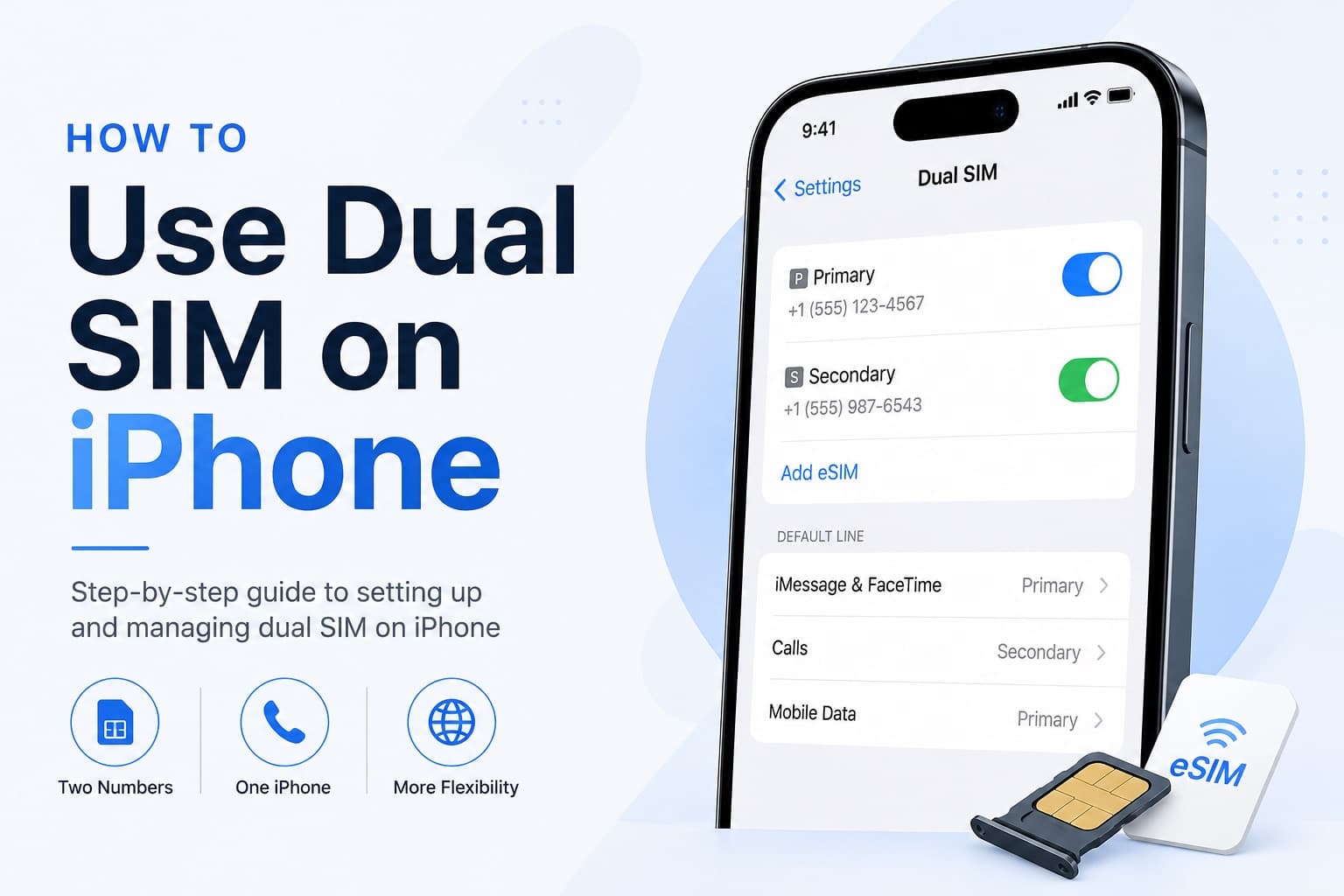
How to Receive SMS and Bank Texts Abroad Using a Travel eSIM
A properly configured dual-SIM iPhone lets you receive bank texts and 2FA codes on your home number while running affordable data through a travel eSIM. This guide walks you through every setting you need to configure before you fly.
Fixing eSIM Network Not Available: Multi-Network Switching vs QCI Priority
The eSIM network not available error usually comes down to one of three causes: no supported partner network in range, an activation issue, or a settings problem blocking cellular data. This guide explains how to diagnose each one and fix it fast.

What Makes Setting Up a Travel eSIM Hassle-Free in 2026?
Modern travel eSIMs like Roamix deliver a QR code in 60 seconds, install in under 5 minutes, and connect automatically on arrival. Here's exactly what makes setup so seamless compared to the old way.