eSIM vs Physical SIM: Key Differences for Travelers
On this page
When you compare esim vs physical sim, the biggest difference is not signal quality. It is how you activate service, switch plans, and manage your phone, especially when you travel.
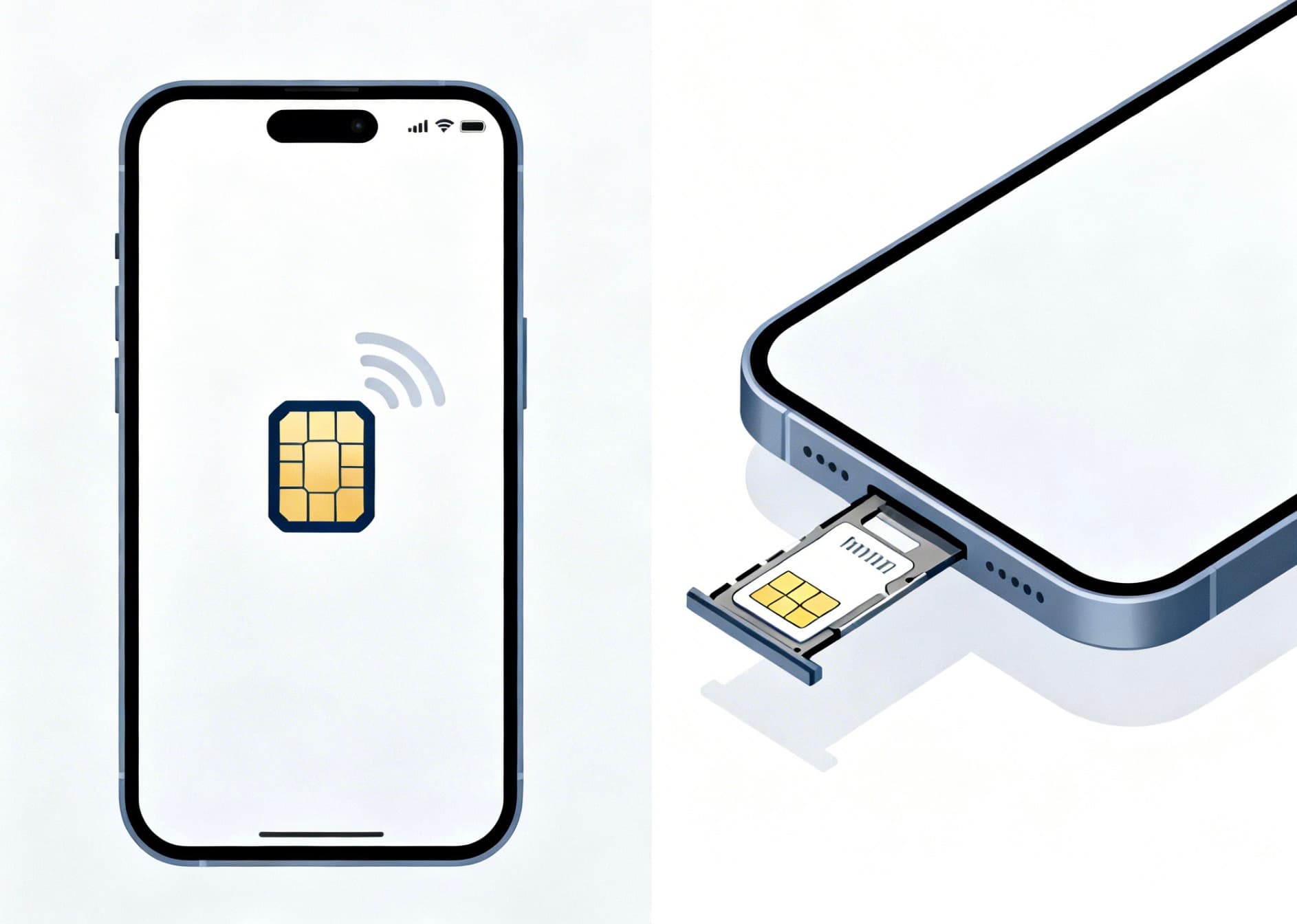
A physical SIM is a small card you insert into your phone. An eSIM is a digital version built into the device.
Both connect you to a mobile carrier. Both can give you the same network access, speeds, and coverage when they use the same plan.
For most travelers in 2026, eSIM is the easier option because you can buy, install, and activate mobile data without waiting for a card, opening a sim tray, or visiting a store.
That is one reason travel eSIM providers like Roamix have grown quickly. Instant setup before a trip and fewer roaming surprises abroad are big advantages.
Key Takeaways
- eSIM is usually faster and easier to set up than a physical SIM card.
- Physical SIM still wins on broad compatibility and easy phone swapping.
- For travel, using dual SIM often gives you the best mix of flexibility and convenience.
What eSIM And Physical SIM Actually Mean
Both options do the same core job. They identify your phone to a mobile carrier so you can use mobile data, calls, and texts on that network.
What Is an eSIM?
An eSIM is an embedded SIM, sometimes called a digital SIM. The chip is already built into your phone, so you do not insert or remove anything physically.
You activate it by downloading a carrier profile, often with a QR code, app, or manual setup details. You can connect a new plan in minutes if your phone and carrier both support eSIM.
What Is a Physical SIM Card?
A physical SIM card is the removable card you place into your phone’s sim card slot. Most modern phones use a nano SIM, which is very small but still a separate physical piece.
Your carrier account is tied to that card. If you want to move service to another phone, you often just move the card to the new device.
How an Embedded SIM Differs From a SIM Tray Card
The main difference is where the SIM lives. An eSIM is built into the phone, while a physical sim card sits in a sim tray or physical SIM slot.
That changes the setup experience. With eSIM, you install a profile digitally. With a physical card, you wait for the card, insert it, and sometimes activate it after the fact.
What Both SIM Types Do for Mobile Data and Carrier Access
Both SIM types let your phone register on a carrier network. That is what gives you access to mobile data, voice service, and texts.
If you use the same carrier and the same plan, eSIM and physical SIM do not have a built-in speed advantage over each other. The real difference is management, not radio performance.
eSIM Vs Physical SIM: The Core Differences
The real gap between these two options shows up in setup, switching, security, and daily flexibility. If you change carriers often or travel often, the difference becomes much more noticeable.
Setup and Activation Speed
eSIM is usually faster. You can buy a plan online, scan a QR code, and install it over Wi-Fi in a few minutes.
A physical SIM card takes more steps. You may need to wait for shipping, pick one up in a store, or handle a tiny card and sim tray tool.
In airports and on travel days, that extra friction matters.
Switching Carriers and Adding New Plans
If your device has eSIM support, switching carriers can be very simple. Many carriers let you add or replace eSIM profiles without mailing anything.
Physical SIM cards are still slower to manage. You usually need a new card when you switch carriers, and that adds time and hassle.
Security, Theft Risk, and Profile Control
eSIM has a security edge because it cannot be removed from the phone like a physical sim card. If your phone is lost or stolen, a thief cannot just pop out the SIM card to slow tracking.
Physical SIM cards are easier to remove, lose, or damage. Some people like the direct control of holding the card and moving it themselves.
Compatibility, Convenience, and Everyday Flexibility
Physical SIM still has wider compatibility across older phones, budget devices, and smaller carriers. If you want the safest bet for broad support, it remains useful.
eSIM is more convenient on modern phones. You can store multiple eSIM profiles on many devices, even if only one or two are active at a time.
That makes everyday plan changes much easier.
Which Is Better for Travel?
For travel, the best choice usually comes down to convenience, phone compatibility, and how many countries you plan to visit. In most real travel scenarios, eSIM is easier to manage than buying local SIM cards one by one.
Why Travel eSIM Is Usually Easier Abroad
A travel eSIM lets you set up mobile data before you leave home. That means you can land, turn off airplane mode, and connect without searching for a kiosk or local shop.
This is especially helpful on short trips, late-night arrivals, and multi-stop itineraries. You also avoid swapping out your home SIM card and risking that tiny card getting lost in a hotel room or airport terminal.
When a Physical SIM Still Makes Sense
A physical SIM still makes sense if your phone does not support eSIM, your device is carrier-locked, or you are going somewhere with limited eSIM support.
It can also work well for long stays in one country, especially if a local carrier offers a very strong in-person prepaid deal. If you are staying for months and want local calls, texts, and retail support, a physical SIM may fit better.
Using Dual SIM to Keep Your Home Number Active
Dual SIM is one of the most useful features for travelers. You can keep your home number active for calls and texts while using a travel eSIM for mobile data.
You keep access to banking texts, ride-share logins, and regular messages without paying your home carrier’s daily roaming fee.
Regional and Global eSIM Options for Multi-Country Trips
If you are crossing borders, a regional or global eSIM is often the cleanest option. You buy one plan, use mobile data in multiple countries, and avoid replacing a SIM card every few days.
For example, if your trip covers Paris, Rome, and Berlin, one regional plan is much simpler than buying separate local SIM cards in each stop.
Device Compatibility, Dual SIM, and Switching Phones
Before you switch to eSIM, check more than just your phone model. Carrier support, unlock status, and dual SIM behavior all affect whether the experience will be smooth.
How to Check eSIM-Compatible Devices
Start with your phone model and region. Many iPhones, Google Pixel devices, and recent Samsung Galaxy phones support eSIM, though carrier support can vary by market and exact model.
You should also confirm that your phone is unlocked. A phone can be eSIM-compatible and still fail with a new provider if your carrier lock is still active.
How Dual SIM and DSDS Work in Real Life
DSDS means Dual SIM Dual Standby. It lets your phone keep two lines available at the same time, such as your home line and a travel data line.
You can set one line for mobile data and the other for voice and texts. On most modern phones, setup is simple once both plans are installed.
What to Know Before Switching Phones
Physical SIM is still easier when you switch phones often. You can usually move the card in seconds.
With eSIM, moving to a new phone may require reactivating the profile, transferring through the operating system, or contacting the carrier. It is not hard, though it is less instant than swapping a card.
Why Carrier-Unlocked Devices Matter
An unlocked phone gives you the freedom to switch to eSIM or use a local physical SIM abroad. Without that, your options shrink quickly.
If your phone is tied to one carrier, you may not be able to install a travel eSIM at all, even if the hardware supports it.
Roamix’s Perspective: Where eSIM Delivers More Value
From a travel point of view, eSIM shines when you need speed, flexibility, and less friction on the road. That is where services like Roamix fit well, because the value is not just the SIM format, it is the travel workflow around it.
Instant Activation Before Departure
One of the most useful parts of travel eSIM is that you can install it before you fly. With Roamix, your QR code and activation details are typically delivered within 60 seconds, so you can set everything up on home Wi-Fi.
That reduces day-of-travel stress. You land with mobile data ready to go, rather than trying to solve connectivity after arrival.
How Roamix Supports Travelers Across 190+ Destinations
Roamix offers travel eSIM plans in 190+ countries and territories, including country plans, regional plans, and a global eSIM option.
That covers a wide range of travel styles, from one-week vacations to frequent international work trips. You do not need to keep hunting for a new physical sim in each destination.
Global IP Breakouts, Hotspot Use, and Plan Flexibility
Roamix uses global IP breakouts to connect you more locally instead of routing your traffic unnecessarily far away. In practical terms, that can improve responsiveness for maps, video calls, messaging, and other real-time tasks.
Hotspot use is included on standard plans. You also get plan sizes from 1GB to unlimited, plus top-ups without reinstalling the eSIM.
Where 24/7 Support and the Dashboard Improve the Experience
A travel eSIM is much easier when you can see your plan, usage, and QR code in one place. The Roamix dashboard lets you manage active plans, check data use, and top up quickly.
If your settings are off or you chose the wrong data line, 24/7 support can save time when you need your connection working right away. Roamix also maintains a privacy policy and secure checkout standards, which is important anytime you are buying digital connectivity online.
How to Choose Between eSIM And Physical SIM in 2026
You do not need to treat this as a one-winner decision. The right pick depends on your phone, your carrier, and how you use mobile data day to day.
Choose eSIM If You Want Speed and Flexibility
Choose eSIM if you want quick setup, easier switching, and better travel convenience. It is the stronger choice if you often change plans, use multiple lines, or want to activate service from home.
It also fits frequent travelers who want a clean setup process. Travel providers such as Roamix are built around this value.
Choose Physical SIM If You Prioritize Universal Compatibility
Choose physical SIM if you want broad device support and the simplest possible phone swap. It still works well for older phones, some prepaid setups, and users who prefer something tangible.
If you rarely travel and almost never switch carriers, it may already do everything you need.
When Using Both Is the Smartest Option
If your phone supports dual SIM, using both can be a smart setup. You can keep your home physical SIM in place and add an eSIM for travel or backup data.
This gives you flexibility without fully changing your current setup.
The Future of SIM Cards
The future of SIM cards is moving toward eSIM, especially on premium phones and in the U.S. market. Some devices already skip the physical SIM slot entirely.
If you are buying a new phone in 2026, it makes sense to expect stronger eSIM support and more carriers pushing digital activation first.
Frequently Asked Questions
What are the main advantages and disadvantages of using an eSIM compared to a removable SIM card?
The main advantages of eSIM are fast activation, easier carrier switching, better travel convenience, and improved security because the SIM cannot be removed. The main drawbacks are that not every phone or carrier supports it, and moving service to a new phone can take more steps than swapping a removable SIM card.
Does using an eSIM affect signal strength or call quality compared to a physical SIM?
No, not by itself. If your eSIM and physical SIM use the same carrier plan on the same phone and network bands, your signal strength and call quality should be the same.
Is mobile data speed different when using an eSIM versus a physical SIM on the same network?
Usually no. Mobile data speed depends on the carrier, plan, local congestion, and network technology like LTE or 5G, not whether your SIM is digital or physical.
How does network coverage compare between eSIM and physical SIM in real-world use?
Coverage is tied to the carrier network your plan uses. If both SIM types connect to the same carrier and plan, real-world coverage should be effectively the same.
How do you set up and switch carriers with an eSIM on an iPhone?
On an iPhone, you usually scan a QR code, use a carrier app, or enter activation details in Cellular settings. To switch carriers, you add the new eSIM profile, choose your default line settings, and remove or disable the old one if needed.
Which option is better for international travel and using local carrier plans?
For most short and medium trips, eSIM is better because you can install a travel plan before departure. This lets you avoid buying a SIM card after landing. A physical SIM can be a good choice for longer stays or older phones. It may also be useful in destinations where local eSIM support is limited.
More in eSIM Data Plans
Best eSIM for Southeast Asia: Stay Connected Across Borders
The best eSIM for Southeast Asia in 2026 lets you cross borders without swapping SIM cards. This guide compares regional and country-specific plans to help you stay connected from Bangkok to Bali.

The Best eSIM for the Caucasus: Georgia, Armenia and Azerbaijan
Travel through the Caucasus rarely stays inside one country for long. This guide covers the best eSIM options for Georgia, Armenia, and Azerbaijan, with practical tips on regional plans, border crossings, and keeping your home number active throughout.
The Best eSIM for Japan: Speed, Coverage and Latency Compared
Latency matters more than raw speed when choosing a Japan eSIM. This guide explains why local data routing makes a real difference in Tokyo, Kyoto, and Osaka, and compares the top options for 2026.