The Best eSIM for the Caucasus: Georgia, Armenia and Azerbaijan
On this page
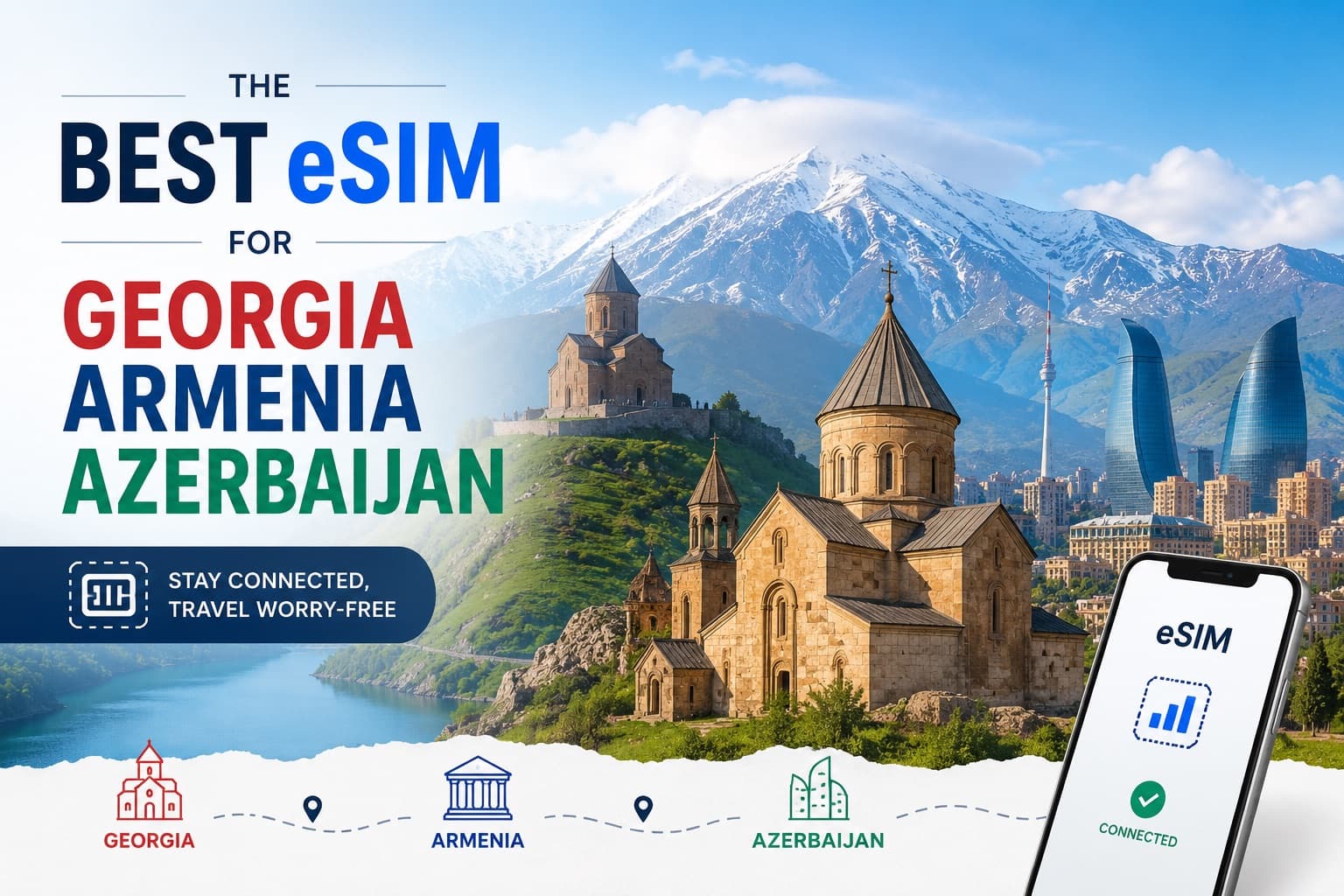
The best eSIM for Georgia, Armenia, and Azerbaijan is one that works cleanly across borders and installs quickly. This avoids the hassle of buying a new SIM in every country.
For adventure travelers moving through the Caucasus by road or on tightly packed itineraries, a regional travel eSIM with dependable coverage and easy top-ups is ideal. Roamix fits that pattern well, with instant QR delivery, regional and global plans, and coverage across 190+ countries and territories.
For travelers crossing between Tbilisi, Yerevan, and Baku, the smartest setup is a single eSIM that can stay active across the whole route. Roamix’s travel eSIM model is built for that kind of movement, making it a strong option for an esim Georgia, esim Armenia, or esim Azerbaijan plan without the friction of physical SIM swaps.
What Travelers Need From Mobile Data in the Caucasus
Travel through the Caucasus rarely stays inside one country for long. Routes often combine city stays, mountain drives, day trips, and border crossings.
A workable plan needs to be simple and flexible. Reliability in transit as well as in town is essential.
Why Border-Hopping Changes Your Connectivity Needs
A traveler moving between Georgia, Armenia, and Azerbaijan needs data that keeps working when the border changes. Navigation, ride-hailing, messaging, and hotel check-ins can all depend on staying online at the moment the road changes country.
When a Single-Country Plan Stops Being Practical
A single-country plan makes sense for a short stay in Tbilisi, Yerevan, or Baku. It becomes less practical once the route includes overland travel or open-ended plans that may change on the road.
What Adventure Travelers Prioritize on the Road
Adventure travelers usually care most about steady coverage and quick activation. The ability to keep moving is also a top priority.
They value hotspot support for laptops, long battery life, and enough data for maps, messaging, and photo uploads without constant monitoring.
Why Physical SIM Cards Create Friction Across Borders
Physical SIMs sound simple until the trip starts moving. At land borders and local shops, the process can slow down quickly because registration, payment, and language support often add more steps than travelers expect.
Passport Registration and Activation Delays
In parts of the region, buying a local SIM can involve passport checks and registration steps before the line becomes active. That delay is manageable in a single city, yet it becomes inconvenient when a traveler arrives late or needs data immediately.
Language Barriers at Shops and Kiosks
Even when staff are helpful, not every kiosk is set up for English-language support. Small misunderstandings about data size, validity, or activation can lead to the wrong plan or extra time spent fixing a basic purchase.
Currency Exchange and Payment Hassles
A physical SIM purchase may require local cash. Card acceptance may vary, and exchange counters are not always convenient at border points.
Those small payment issues can become a real interruption when the goal is simply to get connected and keep traveling.
The Hidden Cost of Swapping SIMs Mid-Trip
Swapping SIMs means removing the home card, storing it safely, and repeating setup in each new country. It also raises the risk of losing a tiny card or missing a call or text on the regular number while the traveler is focused on travel logistics.
How Roamix Simplifies Regional Travel
Roamix removes much of the border friction by keeping mobile data tied to one digital plan. It is designed for travelers who want to move through the Caucasus without redoing setup at every stop.
One eSIM for Georgia, Armenia, and Azerbaijan
A regional travel eSIM can keep a traveler connected across the route, which is especially useful for an esim Georgia, esim Armenia, and esim Azerbaijan trip. That means one purchase, one installation, and far less time spent hunting for local SIM shops.
Instant QR Delivery Before You Depart
Roamix delivers the activation QR code by email, usually within 60 seconds of purchase. It also appears in the account dashboard.
That makes it easy to install over Wi-Fi before departure so the phone is ready the moment it reaches the destination.
Keeping Your Home Number With Dual-SIM
Dual-SIM support lets a traveler keep the home number active for calls and texts while Roamix handles mobile data. For international trips, that setup is especially useful when banks, airlines, or family still need access to the regular number.
Using Regional or Global Plans Without Reinstallation
A regional plan can cover the full Caucasus route. A global plan can suit longer itineraries that extend beyond the region.
The traveler can avoid reinstalling a new eSIM at every border, which keeps the trip moving smoothly.
Coverage, Speed, and Reliability on the Ground
Coverage in the Caucasus can feel very different between major cities, main roads, and remote areas. A good plan should perform well where travelers actually spend time, especially in transit corridors and tourist centers.
What to Expect in Cities, Mountain Routes, and Rural Areas
Cities such as Tbilisi, Yerevan, and Baku usually offer the most stable service. Mountain roads and rural stretches can be less predictable.
A strong carrier partnership and sensible network selection are more important than a cheap headline price.
4G LTE and 5G Availability by Destination
Roamix supports 4G LTE and 5G where local infrastructure allows. In practice, 5G is more likely to appear in major destinations than in remote travel corridors.
Why Global IP Breakouts Matter for Latency
Roamix uses global IP breakouts, which connect data locally rather than routing it far away first. That can reduce latency and improve the feel of maps, messaging, browsing, and video calls, especially when a traveler is moving between countries.
Hotspot Use for Laptops, Maps, and Remote Work
Roamix says standard data plans include hotspot tethering at no extra cost. This is useful for laptops, tablets, and secondary devices.
For remote work or navigation-heavy travel, that can keep everything online from one phone without hunting for café Wi-Fi.
How to Choose the Right Plan for Your Route
The right plan depends on how long the trip lasts and how often the traveler changes cities. Whether the itinerary includes work, streaming, or heavy navigation also matters.
A short urban trip and a multi-country road journey usually need different data allowances.
Short City Breaks Versus Overland Itineraries
A weekend in one capital may only need a modest plan for messaging, ride-hailing, and maps. Overland routes through Georgia, Armenia, and Azerbaijan often justify larger packages because the phone stays in use for longer periods and across more locations.
Data Estimates for Maps, Messaging, and Navigation
Light travel use can stay small, while constant Google Maps, messaging apps, and photo sharing add up faster than expected. Travelers who use navigation all day or share a hotspot with a laptop should choose more data than they think they need.
When Unlimited Data Makes Sense
Unlimited plans make sense for travelers who stream, video call, upload content, or rely on their phone as a primary work tool. They also reduce stress on long journeys since there is no need to keep checking remaining usage.
Top-Ups and Usage Alerts for Flexible Travel
Roamix offers instant top-ups without reinstalling the eSIM. Usage alerts at 50% and 80% help travelers manage their data.
That gives travelers a practical way to extend a trip without scrambling for a new plan at the last minute.
Setup Tips Before Crossing Into the Region
A smooth start depends on preparation before the first border crossing. Most setup mistakes are easy to avoid if the phone is ready, the correct line is selected, and the eSIM is installed in a stable Wi-Fi environment.
Checking eSIM Compatibility and Unlock Status
The phone must support eSIM and be carrier-unlocked before the trip begins. Roamix provides an eSIM Compatibility Checker, which is a useful first step for travelers using a newer iPhone, Samsung Galaxy, Google Pixel, or another modern flagship device.
Installing Over Wi-Fi Before Departure
Roamix recommends installing the eSIM before travel on stable Wi-Fi. That approach avoids rushed setup at the border or airport and gives the traveler time to confirm that the profile is ready.
Picking the Correct Line for Mobile Data
Dual-SIM phones need the correct data line selected in the settings menu. The home SIM can stay active for calls and texts, while the Roamix line should be used for mobile data once the traveler arrives.
Avoiding Common Activation Mistakes
A few setup errors cause most problems. These include leaving data roaming off for the Roamix line or trying to use the plan before arrival.
Customers should also avoid deleting the eSIM. Switching phones without checking support first can cause issues since the QR code is tied to one device.
Frequently Asked Questions
Does eSIM work in Georgia, Armenia, and Azerbaijan?
Yes. All three countries have mobile networks that support eSIM plans from international travel providers. Coverage quality varies between major cities like Tbilisi, Yerevan, and Baku compared to mountain routes and rural areas, where 4G LTE may be less consistent than in urban centers.
Is a regional eSIM better than buying local SIM cards in the Caucasus?
For most visitors, yes. Buying local SIM cards across three countries involves passport registration, potential language barriers, currency exchange, and repeated SIM swaps. A regional eSIM installs once before departure and connects automatically at each border, saving significant time and friction.
Do I need to register my eSIM with local authorities in Georgia or Armenia?
Physical SIM purchases in the Caucasus can require passport registration and activation steps at local shops. Travel eSIMs designed for short-term visitors generally avoid this process since they operate as temporary digital profiles rather than locally purchased cards that trigger the same registration requirements.
How much data do I need for a Caucasus road trip?
Navigation-heavy travel across Georgia, Armenia, and Azerbaijan can use 1 to 2GB per day for maps, messaging, and photo sharing. For longer multi-country overland routes with hotspot use for a laptop or camera, a 10GB or unlimited plan is safer. Roamix offers usage alerts at 50 and 80 percent to help you manage consumption.
More in eSIM Data Plans
Best eSIM for Southeast Asia: Stay Connected Across Borders
The best eSIM for Southeast Asia in 2026 lets you cross borders without swapping SIM cards. This guide compares regional and country-specific plans to help you stay connected from Bangkok to Bali.
The Best eSIM for Japan: Speed, Coverage and Latency Compared
Latency matters more than raw speed when choosing a Japan eSIM. This guide explains why local data routing makes a real difference in Tokyo, Kyoto, and Osaka, and compares the top options for 2026.
Best eSIM for Europe Travel: How to Stay Connected Across 30+ Borders
A regional travel eSIM for Europe means one purchase and one install that works across 30 or more countries. This guide compares the leading providers and explains how to pick the right plan for your itinerary.