eSIM vs. Pocket Wi-Fi: Which Is Better for Travel?
On this page
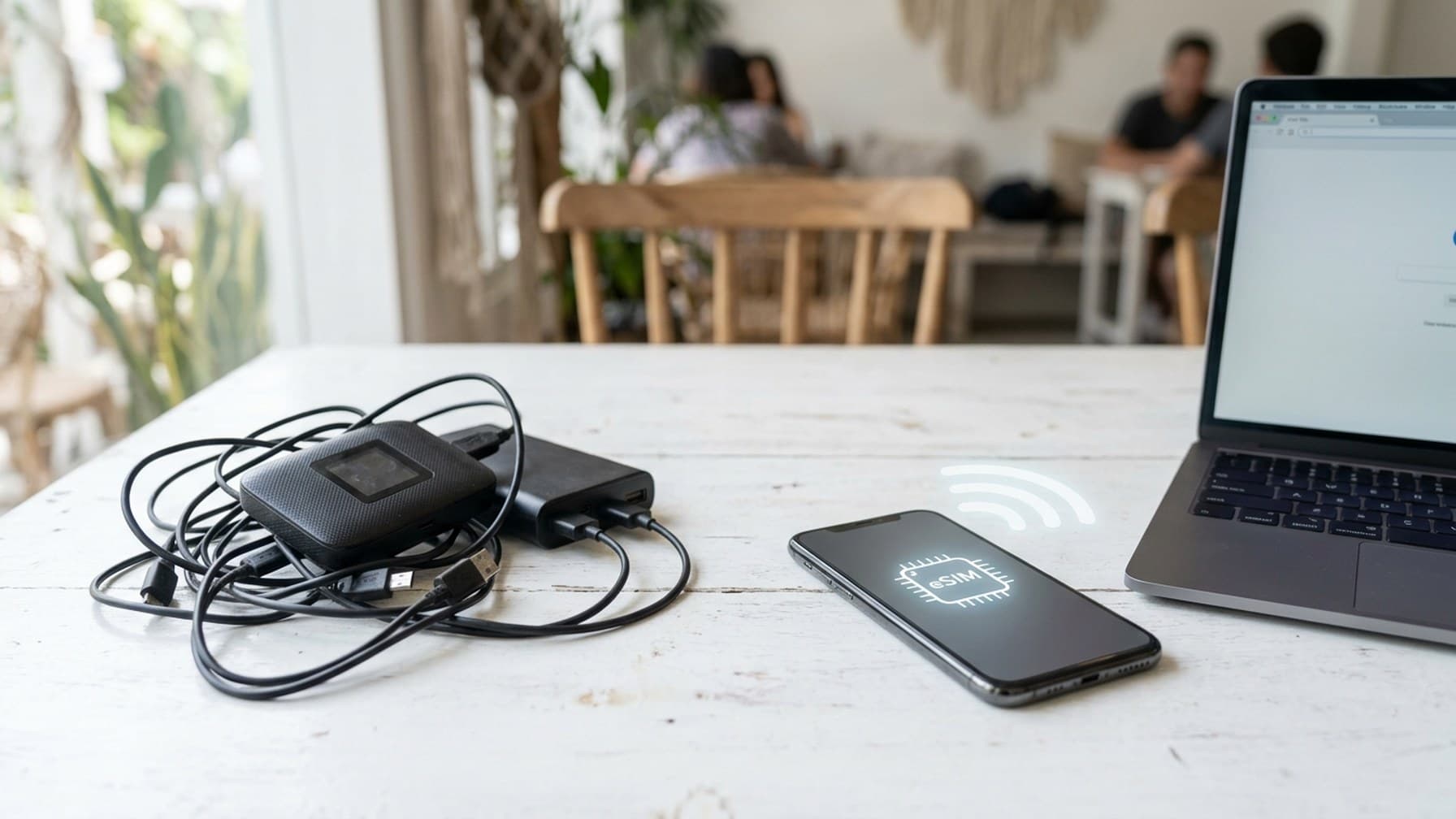
Staying connected abroad used to mean one thing: hunting down a local SIM card at the airport or paying your carrier's eye-watering roaming rates. Then pocket Wi-Fi devices arrived and seemed like a clever fix. Now, eSIM technology has changed the game entirely. If you're trying to decide between renting a pocket Wi-Fi router and buying a travel eSIM for your next trip, the answer is almost always the same: the eSIM wins. But the full picture is worth knowing before you commit.
This comparison breaks down both options across cost, convenience, coverage, and real-world performance. Roamix, a travel eSIM provider trusted by 100,000+ travelers across 200+ countries, offers a useful lens for seeing exactly where pocket Wi-Fi falls short and where a well-designed eSIM plan picks up the slack. If you'd like to skip straight to exploring plans, you can browse Roamix's country, regional, and global options at roamix.app.
What Each Option Actually Is
Both solutions solve the same problem, just in very different ways. One lives in your phone; the other is a separate piece of hardware you carry, charge, and eventually return.
What Is An eSIM?
An eSIM, short for embedded SIM, is a digital SIM card built directly into your device. Instead of inserting a physical SIM card, you download a carrier profile, typically by scanning a QR code, and your phone connects to a local network at your destination.
You don't need a new device slot, a visit to a store, or any physical hardware. Most smartphones released after 2018 support eSIM, including iPhones from the XS and XR onward, Samsung Galaxy S20 series and newer, and Google Pixel 3 and newer. The device just needs to be carrier-unlocked.
How Pocket WiFi Works
Pocket Wi-Fi, also called MiFi or a portable router, is a small battery-powered device that connects to a mobile network using a physical SIM card and then broadcasts a local Wi-Fi signal for your devices to connect to. You typically rent one from a provider, pick it up at the airport or have it shipped ahead of your trip, and return it when you're done.
Most pocket Wi-Fi devices support 5 to 10 simultaneous connections, which sounds appealing for groups. The trade-off is that the battery lasts roughly 8 to 12 hours, meaning you need to charge it daily and carry it everywhere.
Who Needs An eSIM-Compatible Device
If your phone supports eSIM and is carrier-unlocked, there's almost no scenario where pocket Wi-Fi is the better call for solo travelers. The only real barrier to using an eSIM is device compatibility. Older phones, budget Android handsets, and locked devices may not support eSIM profiles. In those cases, pocket Wi-Fi or a physical local SIM card becomes the fallback option worth considering. You can confirm your phone's support with the eSIM compatibility checker.
Which One Is Better For Most Travelers
For the vast majority of travelers in 2026, a travel eSIM is the more practical, affordable, and convenient option. The comparison only gets complicated when you're traveling as a large group with several non-eSIM devices.
Why eSIM Wins On Convenience
With an eSIM, the entire setup happens on your phone before you even leave home. You buy a plan from a provider like Roamix, receive a QR code by email within 60 seconds, scan it over Wi-Fi, and the eSIM is ready to activate the moment you land. No queues, no rental counters, no passport checks.
There's nothing extra to carry, nothing to lose, and nothing to charge. Your phone is already with you; the eSIM is simply part of it.
Where Pocket WiFi Still Makes Sense
Pocket Wi-Fi holds its ground in one specific scenario: connecting multiple devices that don't support eSIM. If you're traveling with a group and several people have older phones or non-eSIM tablets, a single pocket Wi-Fi device can bridge the gap.
It's also worth considering in countries where eSIM coverage from international providers is still thin, though that list is shrinking quickly as networks expand.
The Best Choice For Solo Travelers, Couples, And Groups
- Solo travelers: eSIM every time. Cheaper, instant, and zero extra hardware.
- Couples: An eSIM with hotspot tethering handles two devices comfortably. Each person buying their own plan is often still cheaper than one pocket Wi-Fi rental.
- Families and groups: An eSIM with unlimited hotspot tethering, like Roamix's plans, can serve a family's devices without a separate router. For very large groups mixing eSIM and non-eSIM devices, a combination approach occasionally makes sense.
Cost, Fees, And Hidden Hassles
Pocket Wi-Fi looks affordable at first glance, but the full cost tends to creep up quickly once you account for everything the rental actually involves.
Daily Rental Costs Vs eSIM Plans
Pocket Wi-Fi rentals typically run $8 to $15 per day for unlimited data, depending on the destination and provider. Over a 10-day trip, that's $80 to $150 before any add-ons.
Travel eSIM plans are generally far cheaper. Roamix offers plans starting as low as $2 per GB, with rates dropping to around $1 per GB on larger plans. Even an unlimited eSIM plan from a quality provider averages a fraction of the daily rental cost, and Roamix highlights savings of 50 to 85% compared to traditional carrier international roaming rates.
Airport Pickup, Returns, And Shipping Friction
Renting a pocket Wi-Fi device means coordinating logistics you'd rather not think about on travel days. Some providers ship the device to your home ahead of departure, which requires planning days in advance. Others operate counters at select airports, meaning you join a queue before you've even collected your bags.
The return process adds another layer. You have to remember to bring the device back, find the drop-off point, and hope it's open when your return flight lands. Missing the return window often means extra fees.
Loss Or Damage Fees That Catch Travelers Off Guard
This is the cost that surprises people most. Losing or significantly damaging a pocket Wi-Fi device typically triggers a penalty in the $100 to $300 range, depending on the provider and device model. Theft coverage is sometimes offered as an optional add-on, which adds more to the daily rate.
With an eSIM, there is no hardware to lose. If your phone is stolen, your eSIM plan is the least of your problems. There are no device penalties, no insurance upsells, and no damage assessments when you get home.
Speed, Coverage, And Everyday Performance
Both eSIM and pocket Wi-Fi ultimately draw from the same mobile networks at your destination. The real differences show up in battery management, hotspot behavior, and how well each handles everyday travel tasks.
4G LTE And 5G Expectations Abroad
A quality travel eSIM connects to the strongest available local network, typically 4G LTE and 5G where infrastructure supports it. Roamix offers 4G LTE broadly and 5G in markets like the United States, United Kingdom, Germany, Japan, South Korea, Singapore, Australia, and France.
Pocket Wi-Fi devices vary more widely in network generation support. Older rental units may be capped at 4G, and the device itself adds a layer between you and the network. That small overhead rarely matters for browsing, but it's worth knowing if you're comparing specs.
Battery Life, Charging, And Power Bank Trade-Offs
A pocket Wi-Fi device's battery lasts roughly 8 to 12 hours under normal use. That's fine for a day of sightseeing, but it means you're either turning the device off to preserve battery or carrying a power bank to keep it running. A 20,000mAh power bank keeps a pocket Wi-Fi device running longer, but that's more weight in your bag for a problem eSIM users don't have.
Your phone's battery is already something you manage. Adding a second device with its own charging schedule is a real inconvenience, especially on long travel days.
Sharing Data Across Laptops, Tablets, And Family Devices
This is where eSIM providers have closed the gap significantly. Roamix includes unlimited mobile hotspot tethering on all standard data plans at no extra cost. You can turn your phone into a Wi-Fi router for your laptop, tablet, or a family member's device without buying a separate piece of hardware.
Pocket Wi-Fi supports more simultaneous connections by design, typically 5 to 10 devices at once. For a small group, an eSIM with hotspot tethering is usually sufficient and significantly cheaper.
Why Roamix Is The Smarter Alternative
Roamix was built specifically to solve the problems that make both carrier roaming and pocket Wi-Fi frustrating. The result is a travel eSIM that handles the connectivity needs most travelers actually have, without any extra hardware or surprise costs.
Unlimited Hotspot Without A Separate Router
Every Roamix standard data plan includes unlimited hotspot tethering at no extra charge. That means your phone becomes the router. Your travel companion can connect their phone, you can pull up navigation on a tablet, or you can get your laptop online for a video call, all from the same Roamix plan.
This removes the primary reason most travelers consider pocket Wi-Fi in the first place. You get multi-device connectivity without the rental fee, the daily charge, the charging cable, or the return deadline.
Instant QR Delivery With No Airport Queue
Within 60 seconds of completing your purchase, Roamix sends your eSIM QR code by email. You can also access it directly from your Roamix account dashboard. Scanning the code takes under a minute, and you can complete the full installation before you leave home on a stable Wi-Fi connection.
There is no airport counter, no courier delivery window to coordinate, and no passport check for a local SIM purchase. You land, your phone connects automatically to a supported local network, and you're online.
Regional And Global Plans For Multi-Country Trips
Roamix offers Europe regional plans covering 30+ countries with a single purchase, along with regional plans for Asia, the Americas, the Middle East, Africa, the Caribbean, and beyond. For frequent travelers, a global plan covers 130+ countries under one eSIM.
Pocket Wi-Fi rentals are typically scoped to a single country or region, and crossing borders often means a new rental, a new pickup, or a coverage gap. With Roamix, a multi-country itinerary is handled by one plan from the moment you book.
How To Choose Based On Your Trip
The right choice depends on your trip length, group size, and how many devices you need connected. In most cases, the answer becomes obvious quickly.
Best Pick For Short Trips And City Breaks
For a weekend getaway or a city break of 3 to 7 days, a travel eSIM is the clear winner. You buy it in minutes, install it before departure, and activate it automatically on arrival. There's no minimum rental period to worry about, no device to babysit, and no drop-off errand eating into your last day.
Roamix country-specific plans let you pay for exactly the data you need, whether that's 1GB for light use or an unlimited plan for streaming and navigation.
Best Pick For Remote Work And Multi-Device Travel
Digital nomads and remote workers traveling with a laptop, phone, and tablet benefit most from an unlimited eSIM plan with hotspot tethering included. With Roamix, that setup is built in. You're not paying extra for tethering, and you're not renting a separate router.
For destinations with strong 4G LTE or 5G coverage, Zoom calls, file transfers, and everyday work tasks run without issue. Roamix's global IP breakout approach connects you to the nearest local server rather than routing your data around the world, which keeps latency low for video calls and real-time work.
When To Choose Pocket WiFi Anyway
Pocket Wi-Fi is worth considering in a narrow set of situations:
- Your phone does not support eSIM and you're traveling with several devices
- You're organizing connectivity for a large group with mixed device types
- You're visiting a destination where eSIM coverage from international providers is limited
- You already own a pocket Wi-Fi device and just need a local data SIM for it
Outside those cases, the convenience gap and cost savings of a travel eSIM are hard to ignore. If you're heading to South Korea, our South Korea Wi-Fi and internet guide covers the local options in more detail.
Frequently Asked Questions
Which is cheaper for international travel: an eSIM data plan or renting a portable hotspot?
A travel eSIM data plan is almost always cheaper than renting a portable hotspot. Pocket Wi-Fi rentals typically cost $8 to $15 per day before shipping and insurance fees, while eSIM plans can start as low as $2 per GB. Over a week-long trip, the savings from choosing an eSIM are significant.
What are the main disadvantages of using an eSIM for travel?
The main limitation of a travel eSIM is device compatibility. Your phone must support eSIM and be carrier-unlocked to use one, which rules out some older or locked devices. Hotspot tethering is also limited on some providers' plans, though Roamix includes unlimited tethering as standard on all of its standard plans.
Is a portable hotspot more reliable than mobile data when traveling in Japan?
No, reliability is comparable because both options draw from the same local mobile networks in Japan. Japan has strong 4G LTE and 5G infrastructure, and a quality travel eSIM connects directly to those networks without the extra hardware layer, battery management, and rental logistics that a portable hotspot device introduces.
How does an eSIM compare to a portable hotspot for group travel in Korea?
In South Korea, where 5G coverage is extensive, a travel eSIM with hotspot tethering reliably handles a small group's devices. For larger groups needing 8 to 10 simultaneous connections, a portable hotspot has a technical advantage, but an eSIM shared through a phone hotspot covers most real-world group travel needs at lower cost.
Can I use both an eSIM and a portable hotspot on the same trip?
Yes, you can use both on the same trip. A practical scenario is when the main traveler uses an eSIM for personal connectivity while a pocket Wi-Fi device serves companions with non-eSIM phones. It adds cost and complexity, but it is a workable hybrid for mixed groups with different device types.
Are there portable hotspots that support eSIM profiles instead of physical SIM cards?
Yes, some newer portable hotspot devices support eSIM profiles, letting you load a digital data plan instead of inserting a physical SIM. This removes one friction point of traditional pocket Wi-Fi rentals, but you still have to carry, charge, and manage an extra device, along with any rental fees and damage policies.
More in Mobile Internet

Australia Pocket WiFi: Portable 4G, 5G Router & Airport Guide
Planning a trip to Australia and wondering how to keep your phone, laptop, and tablet online without paying a fortune? This guide covers everything you need to know.

South Korea WiFi & Incheon Airport Pocket WiFi Guide
Discover every option for getting internet in South Korea, from Incheon Airport's free WiFi to pocket WiFi, SIM cards, and eSIMs.